

Tools & Equipment
Learn how to cut coping for open-curved retaining walls with precision and confidence. Get practical tips for handling both tight and open curved radius walls.
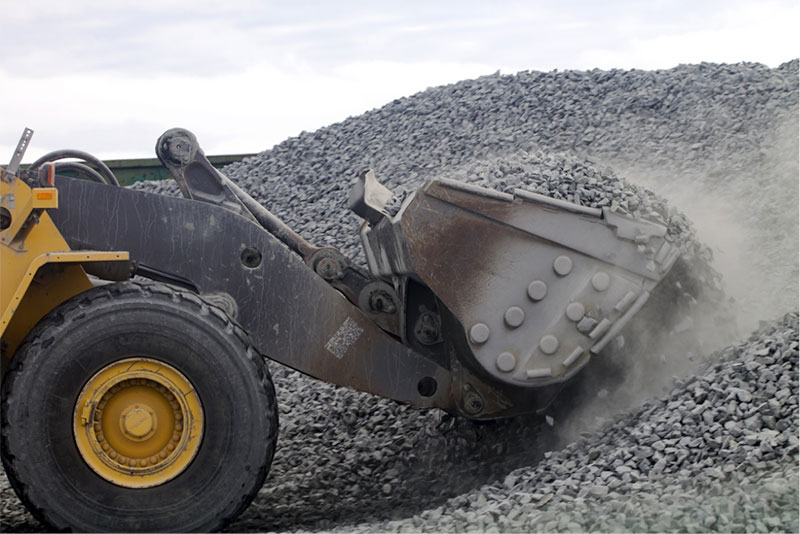
For decades, experts in the hardscape industry have recommended a particular process for the installation of interlocking concrete pavers. Specifically, it has been recommended that contractors use a compacted base conforming to ASTM D 2940. The terminology for this product — a mix of fines and angular stone up to +/- .75” in size — varies across regions and ranges from ‘Item 4’ to Crusher Run. Regardless of the name, for quite some time, this is how contractors performed the base installation. After years of extensive research and continued experience, Unilock has found the use of open-graded base materials to be applicable to more than just true permeable paver installations. In fact, many Unilock Authorized Contractors are saying goodbye to fines and using clean stone for all of their projects.
Substantial experience now leads to a new recommendation: that contractors employ all clear, open graded base. As described in the Unilock Advanced Tech Guide, this process entails using a “permeable base model for ‘non-permeable’ installations when appropriate.”
Why the need for this change? The previously recommended base materials do not provide the best combination of the two most important aspects of the paver base: proper drainage and the load-bearing capacity necessary for appropriate traffic. The open graded base system uses two different types of open graded aggregates—ASTM #57 as the base layer and ASTM #8 as the final bedding layer or leveling stone. These angular crushed stones are laid to create a stable, permeable foundation. The final bedding layer of ASTM #8 is incredibly easy to work with and has a high compaction rate, making it ideal for leveling and supporting pavers. The recommended minimum depth for the open graded base is typically 6 inches, but it may need to be deeper depending on soil conditions and project requirements. When installing, the open graded base system allows for more material to be installed in one or two lifts depending on the depth, which saves time and effort. These materials yield much better drainage performance and provide equally sufficient load-bearing capacity. The open graded base system is especially effective in preventing poor drainage and damage from freeze thaw cycles. Apart from the absolute necessities of permeable base installation, the open graded base model has a number of other advantages, including:
While this recommendation is based upon considerable experience and research in permeable paver bases, the professionals at Unilock are not the only ones emphasizing the value of the permeable base model.
Unilock Authorized Contractor TKC Landscaping has adopted the permeable base system, as well. “We use an open graded base…It replaces the Item #4 and sand setting base, which we found held water and gave you imperfections in base,” they said. “The ¾ inch stone is much easier to work with” and is perfect for their projects in cold Northeastern weather.
Harmony Hill Landscaping, another Unilock Authorized Contractor, has also said goodbye to the traditional Item #4/sand installation process. “A ¾ inch crushed stone is an angular product which compacts easier,” the owners/representatives of Harmony Hill Landscaping said. So, “achieving the proper compaction requires much less time using compacting equipment.” There is also a much lower chance of settlement, which Harmony Hill Landscaping has seen firsthand: “Open graded base with an angular chip stone bedding layer, as opposed to sand, can rid of residual settlement due to improper compaction.”
One of the most discussed issues with the previous base system was that it was found to hold water, which is especially risky in freeze/thaw climates. Harmony Hill Landscaping explained that the permeable base model “is free draining, therefore any water that does permeate through a traditional paver system won’t sit just below the surface in a water-logged Item #4 base. When that happens, the freeze/thaw cycle creates expansion/contraction…moving the paver base.” The professionals at TKC Landscaping also expressed their satisfaction with this aspect. They stated that, while working on a project in 38-degree weather, “it’s not quite freezing yet, but it will be freezing here shortly. Item #4 generally holds water, it freezes…we use the ¾ inch stone…” which prevents freezing and shifting beneath the pavers.
The professionals at Unilock continue to research and determine the best practices for all installation processes, but the evidence shows that employing an open graded base installation provides homeowners and contractors with the most successful end product.
Contact [email protected] or please fill out the form below with details about the issue.
Veuillez appeler le 1-800-Unilock ou contacter l'un de nos responsables de territoire.


