Everything You Need to Know About Paver Base: A Complete Guide to Building a Strong Foundation
- What Is Paver Base?
- What Makes Up a Paver Base? Understanding the Foundation System
- What Type of Gravel for Paver Base Should You Use?
- Types of Paver Base Systems: Traditional vs. Open-Graded
- How Deep Should Paver Base Be?
- How to Build a Paver Base for Long-Term Performance
- How to Lay Paver Base and Bedding Layer Properly
- Expert Tips for a Strong, Durable Base
- Why Getting the Base Right Changes Everything
When planning a patio, walkway, or driveway, most attention goes to the pavers themselves. But long-term performance really comes down to what’s underneath.
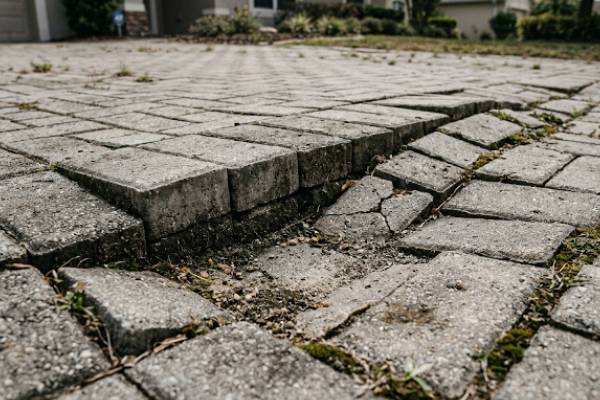
That’s where the paver base comes into play. A properly built base helps the installation handle loads, stay in place, and drain properly over time. Without it, even the highest-quality pavers will fail. In fact, most issues—like sinking, uneven surfaces, or water pooling—come back to poor base preparation, and get worse with freeze-thaw cycles and drainage problems.
Paver base is best understood as a structural system designed to support the entire installation. Every layer plays a role, and when one fails, the whole system is compromised.
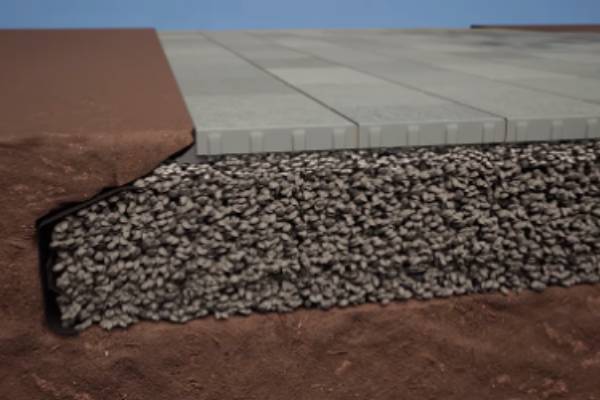
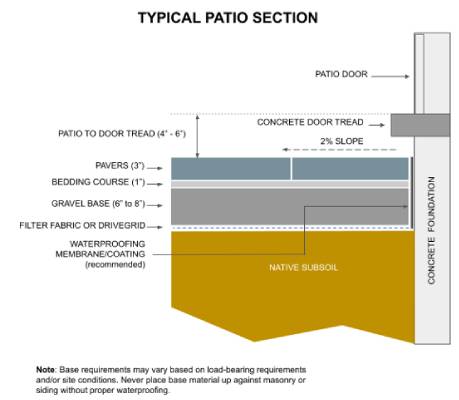
A paver base is not a single material but a layered system that works together to provide strength, stability, and drainage.A paver base is not a single material but a layered system that works together to provide strength, stability, and drainage.
The Core Components of a Paver Base
At the bottom is the native subsoil, which must be excavated and compacted to create a stable starting point.
The main base layer—typically made of crushed stone or gravel—provides the load-bearing capacity. Finally, the bedding layer creates a smooth, level surface that ensures proper paver placement and alignment.
Understanding how these components interact goes a long way when learning how to use paver base effectively in any project.
Choosing the right material is critical to long-term performance. When considering what type of gravel for paver base is best, the answer lies in how the material behaves under pressure.
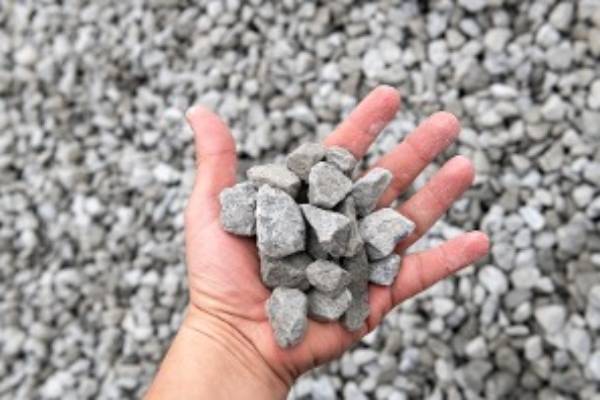
Angular crushed stone, such as ASTM #57, is ideal because the sharp edges interlock, creating a stable and durable structure. These materials compact effectively while still allowing for proper drainage.
By contrast, softer or finer materials—such as limestone screenings, slag, or stone dust—are not recommended to be used as a base. While they may seem easier to work with, they retain moisture and shift over time, leading to instability and eventual failure.
The type of base system you choose will influence not only installation but also long-term durability.
Traditional Base Systems
Traditional systems rely on a compacted crushed gravel base with a bedding layer of concrete sand. While widely used, these systems can be .
Open-Graded (Permeable) Base Systems
Open-graded systems use clear stone without fines, allowing water to flow freely through the structure. improves drainage, reduces hydrostatic pressure, and helps prevent long-term damage.
In addition to performance benefits, open-graded systems often allow for faster installation, since the materials compact more efficiently and require fewer passes.
Determining how deep a paver base should be depends largely on the application and expected load.
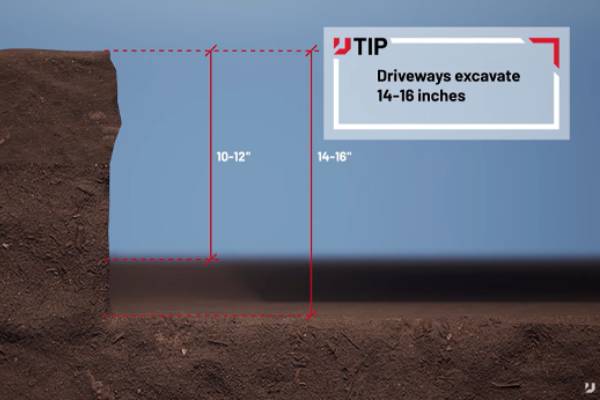
For patios and walkways, a base depth of approximately 10–12 inches is typically sufficient. Driveways, which must support heavier loads, generally require a deeper base of 14–16 inches.
Equally important is extending the excavation beyond the edges of the project. Over-digging the perimeter by 6–12 inches allows for proper installation of edge restraints and helps maintain structural integrity over time.
How Much Paver Base Do I Need?
Calculating how much paver base you need starts with understanding the size and depth of your project.
By multiplying the total area by the required base depth, you can estimate the volume of material needed. However, it’s important to account for compaction, as the material will settle during installation. Adding a small buffer to your calculations helps avoid shortages and delays during the build process. Consult with your dealer for more information.
Learning how to build a paver base properly involves more than simply layering materials—it requires precision at every stage.
Step-by-Step Installation Overview
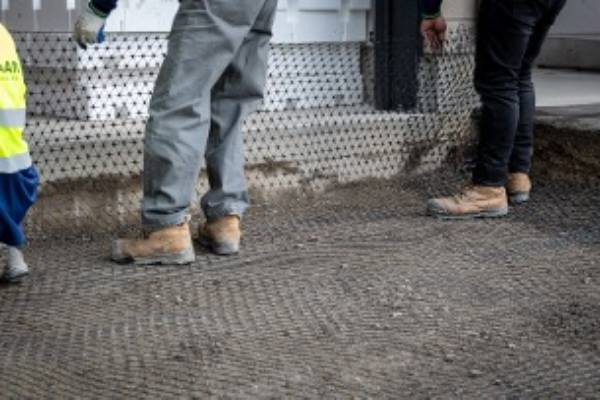
The process begins with excavation. The subsoil must be removed to the appropriate depth and compacted thoroughly to create a stable foundation. From there, a geotextile fabric is installed to separate the soil from the aggregate base and prevent contamination.
In higher-performance systems, a geogrid such as Unilock DriveGrid may be added to improve structural stability and reduce lateral movement. The base aggregate is then installed in controlled layers, typically three to four inches at a time, with each layer compacted before the next is added.
Maintaining proper grade throughout this process is essential. A consistent slope—typically around 2%—ensures that water drains away from the surface rather than pooling beneath it.
One of the most critical steps in the process is learning how to level paver base correctly. Even small inconsistencies can lead to visible imperfections and long-term issues.
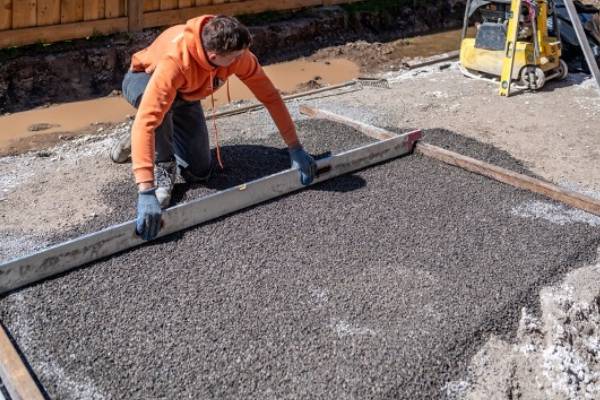
Crews typically use tools like laser levels or Unilock U-Level, string lines, and screed pipes. The bedding layer is carefully smoothed using a straightedge, ensuring a consistent and even surface. This step requires patience, as any irregularities will be reflected in the final installation.
How to Lay Paver Base and Bedding Layer Properly
Understanding how to lay paver base includes mastering the bedding layer, which acts as the final section between the base and the pavers.
The screeded layer should remain thin—generally no more than one inch—to prevent shifting. While traditional installations often rely on coarse sand, due to their durability and ability to perform in wet conditions.
Once the bedding layer is prepared, pavers are placed carefully to avoid disturbing the surface. Edge restraints are installed to secure the perimeter, and jointing material is added between the pavers to lock the system together.
A final compaction step helps everything settles into place, creating a stable and cohesive surface.
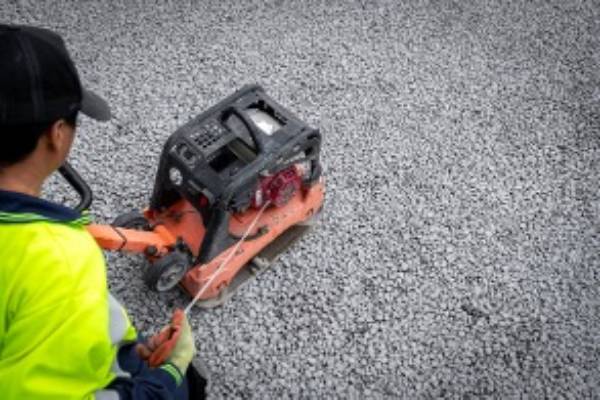
Achieving a high-quality result comes down to attention to detail throughout the process. Experienced installers at every stage.
Recognizing signs of proper compaction—such as a subtle “bounce” in the plate compactor—can help confirm that the base is sufficiently dense. Small techniques, like rolling a screed pipe across the surface to detect dips or extending the base beyond edges for added strength, can make a significant difference in long-term performance.
While pavers define the look of a project, the base determines how it performs. Knowing how to install paver base properly—and understanding the role each layer plays—ensures that your installation remains stable, level, and durable for years to come.
In hardscaping, success isn’t just about design. It’s about building from the ground up—literally. And when the base is done right, everything else falls into place.
Ready to apply what you’ve learned? Take the next step and enroll in our UTEC course on driveway base installation.
Support
- pavers
- permeable pavers